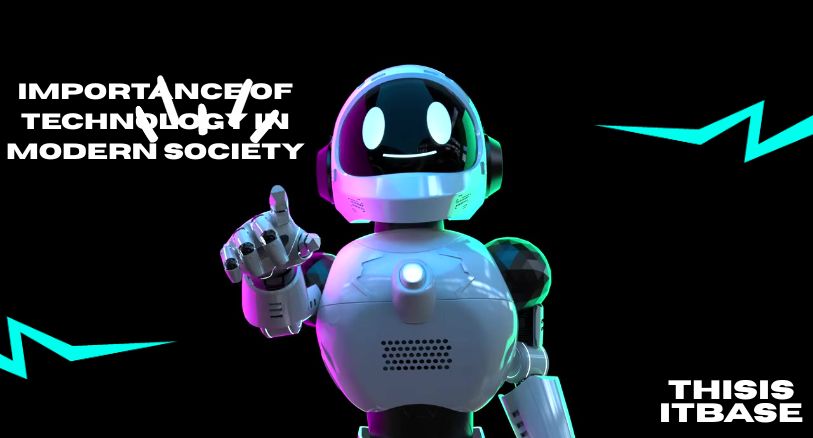
Technology plays an important role in modern society. It supports communication, transportation, healthcare, education, business operations, manufacturing, and many everyday activities.
The importance of technology is not limited to advanced machines or digital devices. Technology includes tools, systems, processes, and methods developed to solve problems and improve the way people perform tasks.
Understanding the importance of technology in modern society helps explain why technological systems have become deeply connected to how individuals, organizations, and communities function.
For a broader understanding of the concept, What Is Technology? explains the meaning and role of technology. The development of technological systems over time is explored in Evolution of Technology.
Why Is Technology Important in Modern Society?
Technology is important because it helps people perform tasks, solve problems, exchange information, and develop new solutions.
Modern societies depend on different technological systems to support essential activities.
These include:
- Communication
- Transportation
- Healthcare
- Education
- Business
- Manufacturing
- Agriculture
- Energy
- Public infrastructure
Technology can improve the speed, accuracy, and efficiency of many activities. However, its value depends on how it is designed, implemented, and used.
1. Technology Improves Communication
Communication is one of the areas most affected by technological development.
People can exchange information across different locations using communication systems and digital tools.
Technology supports the transmission of:
- Text
- Voice
- Images
- Video
- Documents
- Other forms of information
Modern communication systems have made it easier for individuals and organizations to coordinate activities and share information.
2. Technology Supports Education
Technology provides tools and systems that can support teaching, learning, research, and access to educational resources.
Educational institutions and learners can use technology for:
- Accessing learning materials
- Research
- Communication
- Creating documents
- Managing educational activities
- Participating in remote learning
Technology does not replace the importance of teachers, learning methods, or educational institutions. Instead, it can provide additional tools that support the learning process.
3. Technology Helps Improve Healthcare
Technology is important in healthcare because it supports diagnosis, treatment, monitoring, research, and patient care.
Healthcare professionals can use different technologies to:
- Examine medical conditions
- Monitor patients
- Perform procedures
- Analyze information
- Manage healthcare records
- Support medical research
Medical technology can improve the ability to perform certain tasks with greater accuracy and efficiency.
4. Technology Supports Business Operations
Businesses use technology to manage operations, communicate, store information, and support customers.
Technology can be used for:
- Managing information
- Processing transactions
- Communication
- Record management
- Production
- Customer support
- Planning and analysis
The specific role of technology depends on the size, industry, and requirements of the organization.
A small business may use simple systems, while a large organization may depend on complex and integrated technological infrastructure.
5. Technology Improves Productivity
Technology can help individuals and organizations complete certain tasks more efficiently.
For example, machines can assist with repetitive physical work, while digital systems can process and organize large amounts of information.
Technology can improve productivity by:
- Reducing repetitive work
- Supporting automation
- Improving coordination
- Processing information faster
- Reducing certain manual processes
However, improved productivity depends on appropriate implementation, training, maintenance, and management.
6. Technology Supports Transportation
Transportation technology helps move people and goods between different locations.
Modern transportation systems include vehicles, infrastructure, navigation systems, communication systems, and control mechanisms.
Technology has contributed to improvements in:
- Travel speed
- Navigation
- Vehicle safety
- Logistics
- Transportation management
Efficient transportation is important for individuals, businesses, trade, and economic activity.
7. Technology Supports Economic Development
Technological development can contribute to economic activity by creating new industries, improving production processes, and supporting innovation.
Businesses can use technology to:
- Develop products and services
- Improve operations
- Reach customers
- Manage resources
- Support innovation
Technology can also create new types of jobs while changing or reducing the demand for certain existing roles.
The economic effects of technology can vary depending on factors such as education, infrastructure, investment, and access to resources.
8. Technology Helps Solve Problems
One of the fundamental purposes of technology is problem-solving.
Technological solutions are often developed when people identify challenges or opportunities for improvement.
For example, technology can help address problems related to:
- Communication
- Transportation
- Production
- Healthcare
- Energy
- Resource management
Understanding How Technology Works can provide a useful foundation for understanding how technological systems are designed to process inputs and produce specific outcomes.
9. Technology Supports Scientific Research
Technology provides tools that support scientific observation, measurement, experimentation, and analysis.
Researchers can use technological equipment to collect information and study complex systems.
Technology can support research through:
- Measurement instruments
- Laboratory equipment
- Data processing
- Communication systems
- Monitoring equipment
Scientific discoveries can also contribute to the development of new technologies, creating an ongoing relationship between science and technology.
10. Technology Improves Access to Information
Modern systems make it possible to store, organize, and communicate large amounts of information.
Technology can help people access information for:
- Education
- Research
- Work
- Communication
- Decision-making
Access to information can support learning and productivity, although the quality and reliability of information remain important considerations.
Technology provides access to information, but users still need to evaluate whether that information is accurate and trustworthy.
11. Technology Supports Public Services
Governments and public institutions can use technology to support infrastructure and public services.
Technological systems may be used in areas such as:
- Transportation management
- Public communication
- Emergency systems
- Infrastructure monitoring
- Water management
- Energy distribution
The effectiveness of these systems depends on planning, maintenance, security, and access.
12. Technology Creates New Opportunities
Technological development can create new opportunities for individuals, businesses, researchers, and communities.
New technologies can lead to:
- New industries
- New services
- New professional roles
- Improved processes
- Innovative products
- New methods of communication and collaboration
At the same time, technological change may require people to learn new skills and adapt to changing environments.
Technology in Everyday Life
The importance of technology can also be seen in everyday activities.
People interact with different technologies when they:
- Communicate with others
- Travel
- Study
- Work
- Access services
- Use household equipment
- Manage information
Many technologies are so widely used that people may not always notice the systems operating behind everyday activities.
From simple tools to complex infrastructure, technology supports a wide range of human activities.
The Importance of Responsible Technology Use
Technology can provide significant benefits, but responsible use is also important.
Technological systems can involve concerns related to:
- Security
- Privacy
- Reliability
- Environmental impact
- Accessibility
- Dependence on systems
Organizations and individuals should consider both the benefits and limitations of technology.
Responsible design, appropriate management, maintenance, and informed use can help improve the value that technology provides.
How Technology Affects Society
Technology can influence how people communicate, work, learn, travel, and access services.
Its impact can be both direct and indirect.
For example, a new transportation system can affect:
- Travel patterns
- Business operations
- Employment
- Access to services
- Economic activity
Similarly, communication technology can change how organizations coordinate work and how people interact across distances.
These effects show that technology is not simply a collection of tools. It can influence larger social and economic systems.
Challenges of Technology in Modern Society
Despite its importance, technology can also create challenges.
Dependence on Technological Systems
Individuals and organizations may depend heavily on technology for essential activities.
Unequal Access
Access to technological resources may not be equal for everyone.
Security and Privacy Concerns
Connected systems can require strong measures to protect information and systems.
Rapid Technological Change
Technology can change quickly, requiring people and organizations to adapt and develop new skills.
Environmental Considerations
The development, production, use, and disposal of technology can have environmental effects.
Understanding both the benefits and challenges provides a more balanced view of technology’s role in society.
Conclusion
The importance of technology in modern society can be seen across nearly every major area of human activity.
Technology supports communication, education, healthcare, transportation, business, research, public services, and everyday life. It helps people solve problems, improve processes, and develop new opportunities.
At the same time, technology must be used responsibly. Its benefits depend not only on technological capability but also on accessibility, reliability, security, maintenance, and how people and organizations choose to use it.
As technological systems continue to develop, their influence on modern society will continue to evolve.
FAQ’s
Why is technology important in modern society?
Technology is important because it supports communication, healthcare, education, transportation, business operations, research, productivity, and many everyday activities.
How does technology improve society?
Technology can improve efficiency, communication, access to information, healthcare services, transportation, and the ability to solve practical problems.
What is the role of technology in education?
Technology can provide tools for accessing educational materials, research, communication, and different forms of learning.
How does technology help businesses?
Technology can support communication, information management, operations, customer service, production, and decision-making.
Can technology create challenges?
Yes. Technology can create challenges related to security, privacy, unequal access, system dependence, rapid change, and environmental impact.