Technology has become an important part of modern life. People use technology for communication, education, healthcare, transportation, banking, entertainment, work, and many other everyday activities. Smartphones, computers, internet services, automation, and digital platforms have made many tasks faster and more convenient. At the same time, technology can create challenges when…
Technology
-
-
Challenges and Limitations of Modern Technology: Key Issues
Modern technology has transformed communication, education, healthcare, business, transportation, entertainment, and everyday life. However, technological progress also creates challenges that affect individuals, organizations, and society. These challenges range from privacy and cybersecurity concerns to high costs, digital inequality, technical failures, environmental impact, and dependence on digital systems. Understanding these limitations…
-
Benefits of Technology in Modern Life: Key Advantages
Technology has become an essential part of modern life, influencing how people communicate, work, learn, travel, manage money, access healthcare, and spend their free time. From smartphones and computers to digital payments and online services, technology helps people complete many everyday activities more quickly and conveniently. The benefits of technology…
-
Technology Adoption: How People and Organizations Accept New Technology
Technology adoption refers to the process through which individuals, businesses, governments, and other organizations begin using a new technology. Adoption can involve anything from a person starting to use a new smartphone application to a company implementing cloud computing, automation, or artificial intelligence across its operations. Adopting technology involves more…
-
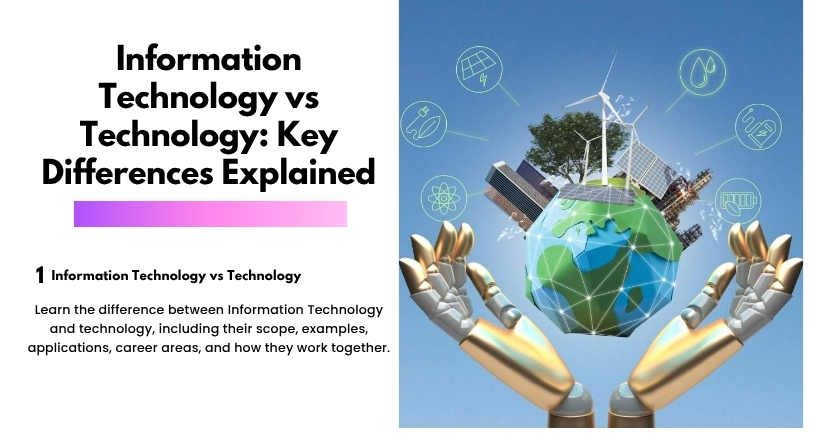
Information Technology vs Technology: Key Differences Explained
Information Technology and technology are closely related terms, but they do not have the same meaning. Technology is a broad concept that covers tools, systems, techniques, and processes created to solve problems or perform useful tasks. Information Technology (IT) represents a specific area of technology focused mainly on computing, information,…
-
Communication Technology: How Technology Enables Communication
Communication Technology: How Technology Enables Communication Communication technology has transformed how people exchange information across short and long distances. Smartphones, computers, internet networks, messaging platforms, video conferencing systems, satellites, and wireless devices allow people and organizations to communicate almost instantly. Modern communication does more than transmit voice or text. Digital…
-
Electronic Technology Explained: Components, Uses & Examples
Electronic technology forms the foundation of many devices and systems used in modern life. Smartphones, computers, televisions, medical equipment, communication devices, industrial machines, and countless other products depend on electronic components to process, control, store, and transmit electrical signals. Unlike mechanical systems that primarily depend on physical movement, electronic systems…
-
Digital Technology Explained: Features, Uses & Examples
Digital technology is a major part of modern life, powering smartphones, computers, online services, digital payments, cloud platforms, streaming services, and many other systems people use every day. Unlike traditional technologies that may rely heavily on physical or analog processes, digital technology uses electronic systems to create, process, store, and…
-
Technology Infrastructure Explained: Components, Types & Examples
Technology infrastructure is the foundation that allows modern digital products, applications, networks, and services to operate. While users interact with visible technologies such as smartphones, websites, applications, and computers, many underlying components work together behind the scenes. These components can include hardware, software, networks, servers, storage, cloud resources, data centers,…
-
Stages of Technological Development Explained
Technology does not usually appear as a finished solution. Most technologies develop gradually as people discover new ways to solve problems, improve existing tools, and adapt systems to changing needs. The stages of technological development describe this progression from identifying a need to developing, improving, adopting, and eventually replacing a…